
This cheered me right up today. Thank you Kris
From The Usefulness of Useless Knowledge:
Is it not a curious fact that in a world steeped in irrational hatreds which threaten civilization itself, men and women—old and young—detach themselves wholly or partly from the angry current of daily life to devote themselves to the cultivation of beauty, to the extension of knowledge, to the cure of disease, to the amelioration of suffering…..?
The world has always been a sorry and confused sort of place—yet poets and artists and scientists have ignored the factors that would, if attended to, paralyze them.
From a practical point of view, intellectual and spiritual life is, on the surface, a useless form of activity, in which(people) indulge because they procure for themselves greater satisfactions than are otherwise obtainable.
I shall concern myself with the question of the extent to which the pursuit of these useless satisfactions proves unexpectedly the source from which undreamed-of utility is derived.
Filed under: 10 Questions for Strategists, Great Stuff, Innovation, The Rules

There’s no more common trope than marketers currently want to be ‘data driven story- tellers’.
Q: How does strategy help contribute to creative product?
While I think that there may as many definitions of strategy as there are strategists, it will aways help you if you can define where your skills and interests lie and how you can best help a team.
One of my favourite frames for understanding is to find where a strategist sits on the spectrum from Numbers to Narrative.
For many years the notion of ‘t-shaped talent’ which has broader skills and knowledge and learns by linking up different perspectives from different specialties, was a profile we all sought. You wanted to have a wide lens of expertise and a deep specialisation.
If you think in a linear fashion, you’d start at one end of the spectrum, where at one end you have data and at the other end the strategic narrative, to find where you might sit and then focus on developing your strength.
True Data Strategists that can identify both patterns in the noise and identify the human insight driving it are quite rare. I think we’re all discovering the growing and evolving value of data in crafting creative solutions. It won’t do you any harm to refine or build your ability to both build and read a spread sheet and design an information to be accessible and powerful.
Creative Strategists, or Comms Planners structure a messaging house to get stuff done. They carve up confusion and create clarity. They stand in the shoes of their audiences and babel- fish translate corporate propaganda so it has heart and meaning. They are word smiths, the architects of distributed sense and driven to find the compelling and the engaging and the cut through. Again- it’s super important to be able to have the skill to construct communication in a way that people want to listen, what to know what’s next and actually want to take action on what’s being said.
In between and aligned to these areas of expertise are the researchers, analysts, consultants, specialists, brand planners and the media planners and all the other job descriptions allocated to our roles.
In a t-shaped universe you only get one specialisation.
What may add depth to the metaphor is if you understand a spectrum as a wave and not a line:

Then you can explore the notion of how the disciplines might amplify each other, and how they generate more momentum when you put them together, how you can cover more ground if you have more than one….

My thoughts are that you don’t have to choose, that specialisation is for insects, that the better the base the stronger the building and so on.
But it is a good idea to know what skills you have, and where you have gaps and ensure you’re bringing rigour and research to whatever you do.
Just don’t forget that if you want people to do anything with what you find, you’ll need a good story.
PS:
A human being should be able to change a diaper, plan an invasion, butcher a hog, conn a ship, design a building, write a sonnet, balance accounts, build a wall, set a bone, comfort the dying, take orders, give orders, cooperate, act alone, solve equations, analyze a new problem, pitch manure, program a computer, cook a tasty meal, fight efficiently, die gallantly. Specialization is for insects.
One of those days when three senior team members start spontaneously singing…

PS: just found this on return from Friday lunch…mischief managed!

Filed under: 10 Questions for Strategists
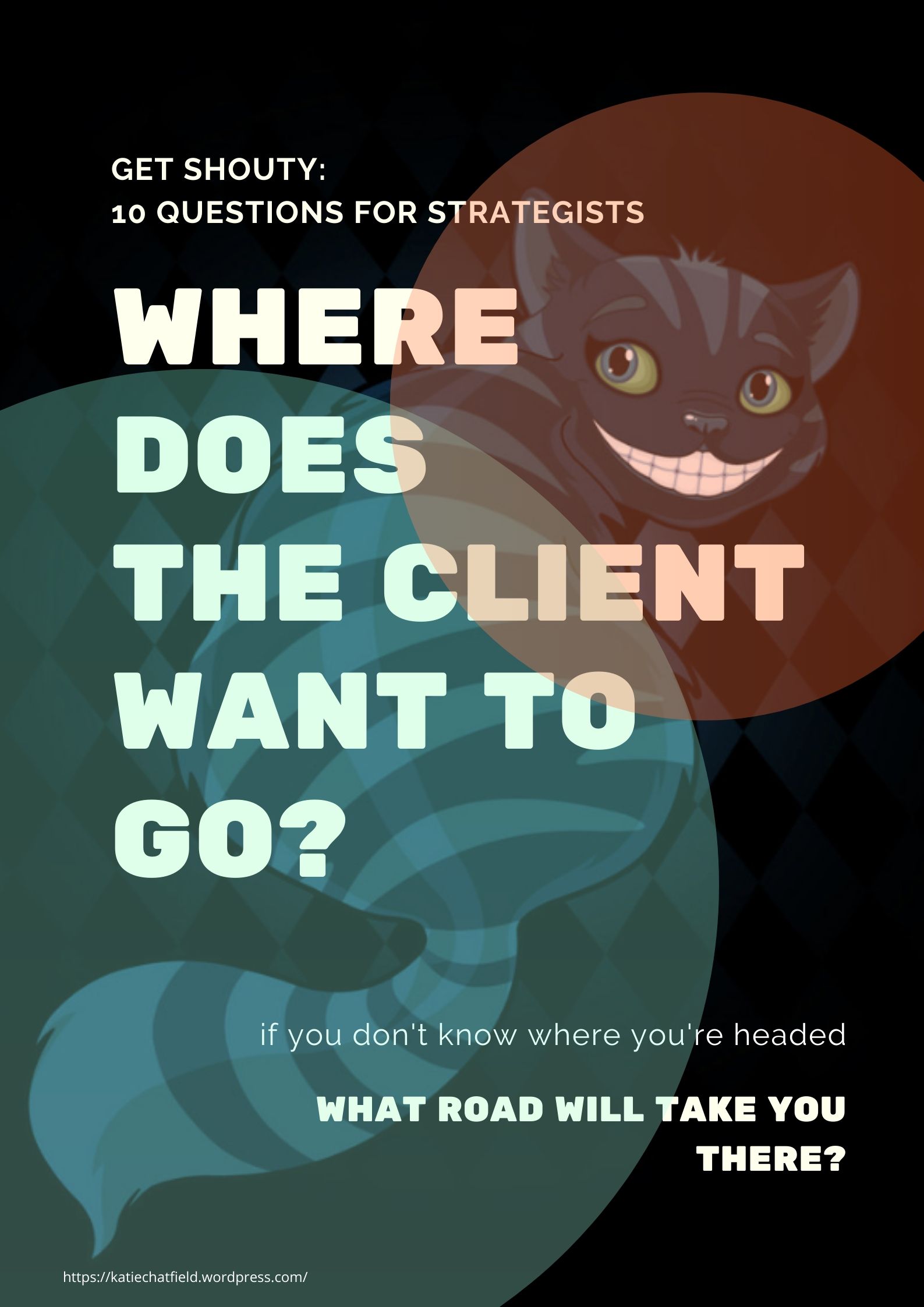
3 of 10 QUESTIONS FOR STRATEGISTS
I’m still exploring the richness of conversation that happens at Strategists Anonymous.
(Part 1 Nothing Like a Ninja and Part 2 The Difference Between Talent and Tenure)
Once we’ve explored what a definition of strategy is, and how to build your practice, the question turns to our role.
Q. What part does a strategist play in an agency?
I like to think that a big part of what we do is way finding:
- Designing a journey that fits in with a budget and a time frame
- Working out what roads will take you to what destinations.
- Helping to create some clarity on how to choose where to go and what can be experienced once you get there.
- Helping to pick that path and inspire others to walk along it to carve a consistent journey
- Interpreting the signs and signals in the new landscape
- Guiding people back to the path (or being open to alternate routes)
- Identifying where the reflection points are along the way.
- Knowing when to stop
It will help everyone if you can create a map of where you currently are, an itinerary of the voyage and a taste of the end point.
Bon Voyage!
PS: The Cheshire Cat is the only character in Wonderland who actually listens to Alice. With his prompts he teaches Alice the ‘rules’ of Wonderland. He gives her insight in how things work down there.
`Cheshire Puss,’ [Alice] began, rather timidly…..`Would you tell me, please, which way I ought to go from here?’
`That depends a good deal on where you want to get to,’ said the Cat.
`I don’t much care where–‘ said Alice.
`Then it doesn’t matter which way you go,’ said the Cat.
`–so long as I get SOMEWHERE,’ Alice added as an explanation.
`Oh, you’re sure to do that,’ said the Cat, `if you only walk long enough.’”
Filed under: 10 Questions for Strategists, blast from the past, Experience, Get Friendly, Great Stuff, passion

2 of 10 QUESTIONS FOR STRATEGISTS
One of the key things you learn as you practice strategy is to size up the problem you’re addressing.
As you tackle business problems and marketing challenges and service design opportunities and consulting projects you start to understand the unique components that you need to address to get it done.
You start to build frameworks to organise the chaos. Matrices so that you can map out a messaging house. You build process to describe the journey you’ll take clients on. You work out what sells and how clients buy.
You craft your process into a practice. You make charts. Lots of charts that you can remix and reuse and refresh.
They say the only difference between a junior and a senior strategist is the amount of charts they have access to…
(Vegetarian warning….)
All tenure gives you is the experience to know what kind of beast you’re dealing with…and what you need to carve it up.
Charts are knives- they should cut through, they should help you break things down, and carve out the cuts in the carcass.
The more knives you have, the more tasks you can get done quickly.
You wouldn’t use the same knife to chop an onion that you would to fillet a fish.
So your charts need to be fit for purpose, many and various.
And above all- sharp.
Filed under: 10 Questions for Strategists, Experience, Great Stuff, passion

1 of 10 QUESTIONS FOR STRATEGISTS
I’ve been lucky enough to have a new audience for my nonsense in the Strategists Anonymous series of workshops put on by You’re Good, Get Better.
Standing up with the largest cup of coffee I can find the first question of the day is fired at me….
Q: So, what’s a strategist?
Being a strategist, I start contrary wise…
This is what I think we aren’t:
- We’re not ninjas
- We’re not wizards
- And we’re definitely not rockstars
So what are we?
- Curious
- Driven to hear the signal in the noise
- Keen to mix the elements we find and the ones that don’t exist yet into a cohesive score
Q: And what’s the process? How do you do that?
I love this story of Ray and Charles Eames:
Sell your expertise and you have a limited repertoire. Sell your ignorance and you have an unlimited repertoire. Sell ignorance and your desire to learn about a subject. The journey of not knowing to knowing is the work.
It’s from the documentary The Artist and the Painter, and it really is “an extraordinary and enjoyable history of how two people influenced so much of our thinking and surroundings today”. I couldn’t recommend it more highly..anyhoo
As strategists we’re incredibly fortunate to sell people our journey of not knowing to knowing. We get to take people on the ride with us. We get to keep what we learn and get better. And get paid for it. It’s a crazy good deal.
But it probably won’t shower you in glory.
I have 10 of these questions mapped out as a result of the crews who participated in the workshops. Thanks for the curiosity y’all- hope sharing these helps.
P.S. You’re unlikely to ever need more cowbell

In the 6th century, a list of the seven deadly sins was officially outlined by Pope Gregory the Great, who reduced the original list of eight written by a respected monk named Evagrius the Solitary. The list was changed only slightly again in the 17th century, with the final list, which we still refer to today, composed of lust, avarice, gluttony, sloth, anger, greed, and pride.–
The Atlantic notes that seven years ago in a soliloquy transcribed by The Wall Street Journal, Reid Hoffman suggested a comprehensive theory of social-network success.
“Social networks do best when they tap into one of the seven deadly sins,” the LinkedIn co-founder and venture capitalist said.
I do remember it all starting out quite differently. I was recently kicking through some of my archives and came across this piece from 2006: We are not alone
Mother Teresa spoke often about the effects of being lonely and the crushing poverty of spirit that is caused by feelings of being unwanted- so much much so that she called this ‘the leprosy of the West’. A recent international study claimed that more than a third of adults are lonely.
There’s alot of talk that screens are taking over face to face interaction, and that culture is suffering as a result. David Armano’s fantastic post We Are Not Alone. Life 2.0 puts forward the notion that the growing suite of web tools allows us, through creating and connecting, to find out that others like us exist.
There is a now a place where we can find that ‘we are not alone’ and more. Screen life, online life IS ‘real’ life. For many (and there are many- over 450,000 bloggers in Australia alone) our online time informs and inspires our terrestrial activities.
Examples of this range from the fabulous red paper clip story, to the spontaneous walkouts in high schools of over 40,000 students across California organised through individual myspace pages and to the popularity of acts like The Artic Monkeys and OKGo.
These stories, OUR stories, will only grow as we continue to contribute our time and energy to trying to connect with each other.
Myspace organised walkouts…wowsers…(the more things change the more they stay the same: https://www.schoolstrike4climate.com/ organises local walkouts through Facebook, a platform that wasn’t even available in Australia 13 years ago)
While I’m sure that humanity’s darker traits get more oxygen on social platforms that we’d like- there is light to be found. I wonder how useful it is to entirely demonise something that is only reflective of… well, us.
Twitter gets a very notices, a a wrath filled echo chamber and for very good reasons.
My parry and repost:

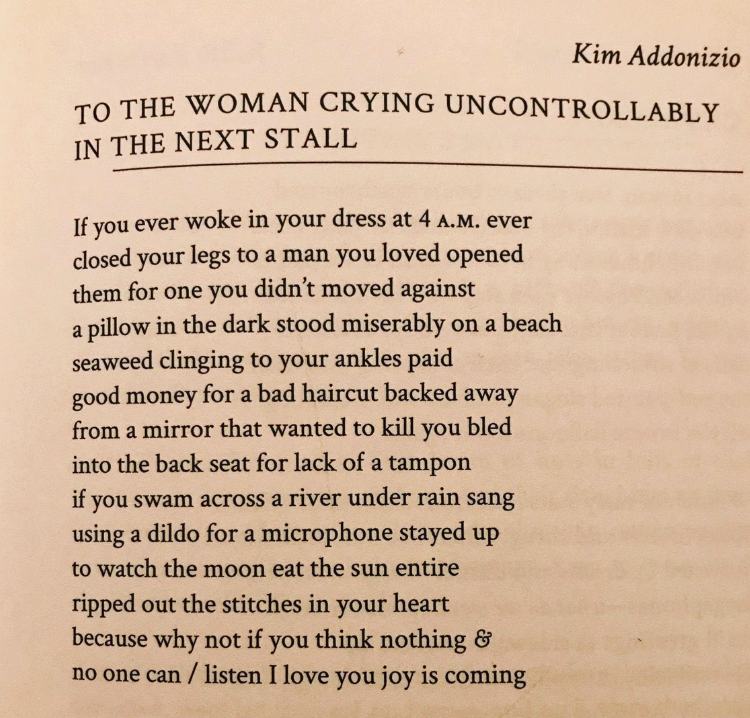
( Rob Campbell shared this with the line: “The most beautiful, loving – yet heart wrenchingly sad – story that you’ll read today. Especially the last 5 words.”)
Please explore this marvellous thread about sharing unsolicited poetry with crying strangers:
The kindness will just kill you.


Some of the things I love, love, love about what I get to do for a day job are the opportunities to examine workplace cultures and develop ways to influence them to exhibit resilient positive outcomes.
It’s not a simple process, it’s not even complicated. It’s complex and sometimes chaotic. Mostly though where I start is Disorder.
I recently got asked by my friend Matt Granfield to comment on what he put forward as an hypocritical action from a holding company about the contradictory behavior and promises of two of their brands, and did I see anything wrong with that.
I thought it was an interesting notion that we might hold advertising to greater standards of morals and ethics than we hold ourselves. I thought that it might be valid to ask if that was right.
In I tweet therefore I am, Peggy Orenstein shares her experiences:
Each Twitter…
View original post 437 more words

I like this question. Very much.
See the video here (I’ve put quotes in italics)
Word and pictures aren’t enough anymore…..we have to make something with a little more substance
Innovation comes from the making of new things (not just the ideation)
People still glorify campaigns- no P&L, no equity share for employees, no other ambition than to create a relationship with consumers- one of the reasons why these projects don’t hang around is when the campaign money runs out no one cares about them. They win their award …and then they’re off. But if you try to create a business model and design sustainability (self sustaining) into it-so when the money’s gone the project’s still there. It stops being a campaign and starts to be a product
It was when the panellists really turned away from campaigns and really talked about where products sit in the marketing mix that I think things got interesting:
You now have so many touchpoints- and so few companies have anything to say (or the time or the budget to create content for each of these)
-You need to go deeper into an organisation- and teach the receptionist how to deliver the brand
If products are an expression of utility, delight, innovation and bloody good design, I’d like to think the opportunities to ideate and create business cases to make a difference to everyone’s bottom line are endless for hungry agencies working with brands who are eager for growth ideas.
Filed under: Experience

This is a beautiful Twitter thread on leadership, found on the ever delightful swiss miss.
I like the tension and the glorious space for exploration in between notions of how how we turn up, and how we turn up for others.
I’m currently trying to create a deep rail to change the “Today I have to…” conversation to “Today I get to….” The greatest thing I get to do is see ideas born and made by flowering talents. I want to build my focus to “just be present and be a spotlight for others” and let them know it’s their time on the stage and that it’s their time to shine.
The thread examines how this crafts safety in a team. While the hothouse of an agency doesn’t fight death on the line (or it shouldn’t: “It’s PR not ER!) I can’t help but hope that the approach can afford more breathing space to let ideas live.
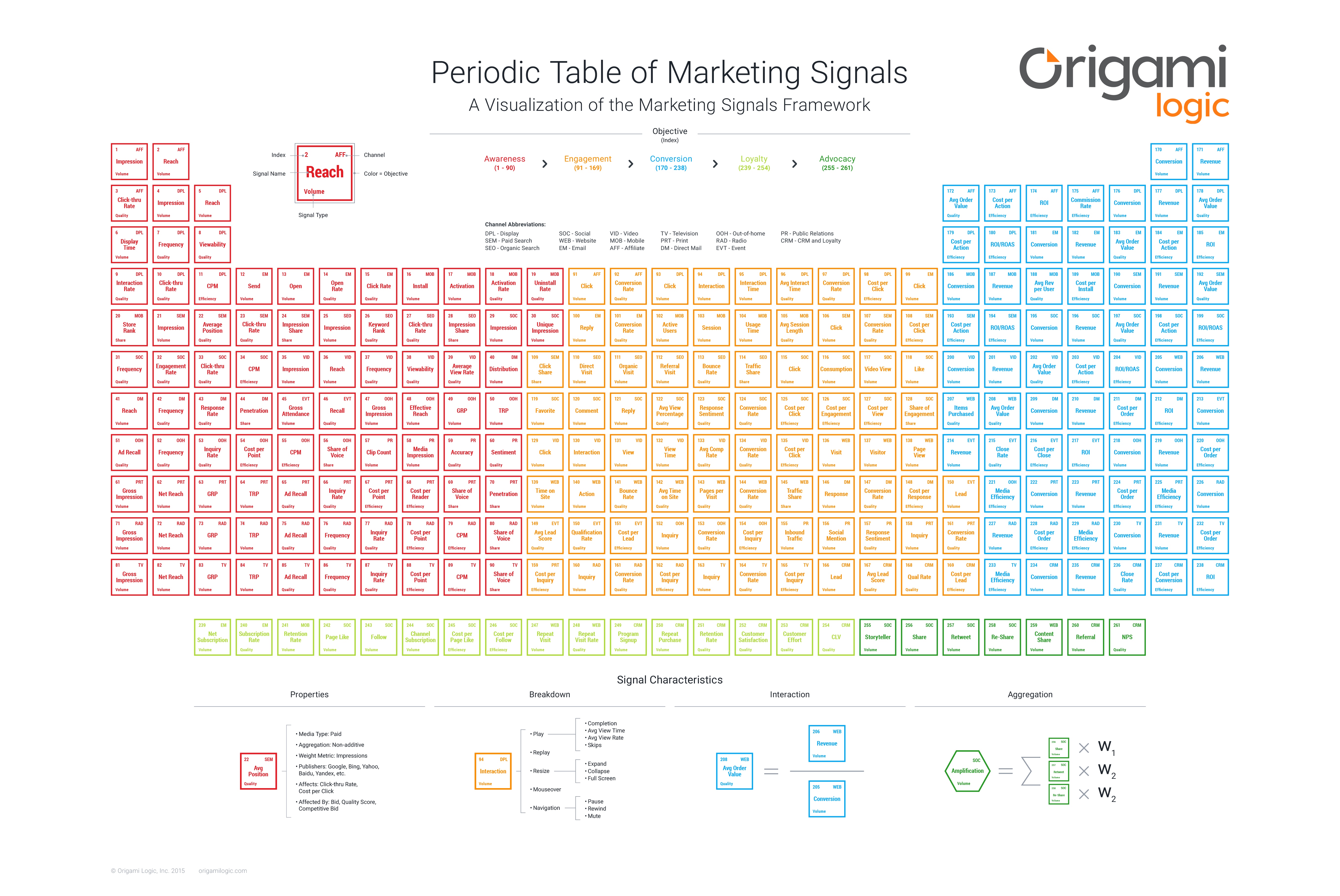
The marketing discipline continues to evolve and has become a complex, rapidly changing, and noisy daily battle. Cutting through this noise and measuring the signals that matter is an increasingly difficult challenge.
I think measurement is about designing for success and then finding new ways to win.
The first question to ask is what counts?
Talking to Marketing Week, Catherine Newman, chief marketing officer for The Times and Sunday Times said
Mass reach is an obsession with people when it comes to digital and the internet,” , contending that it is better to reach 10,000 who have interacted with a brand and are like-minded rather than 1m people but not know who they are.
“It’s not useful to flood the market when it may be cheap but not effective,” she reasoned. “People have to question what metric they’re chasing…”
I came across this fabulous POV over Origami Logic.

Marketing signals — unlike traditional metrics or data — include multi-dimensional measures of quality and relevance to ensure they generate the best and most valuable insights. Additionally, calculations of KPIs specific to campaign objectives and categorization of performance by brand, country, product, etc., add context to the data and make results more relevant to the business. Finally, marketing signals blend science (numbers and metrics) with art (creative, copy, metadata, and strategy) to comprehensively illustrate what is working.
Simply put, marketing signals go beyond representing results. They reach further, bridging the gap between raw data and insights, allowing marketers to gain immediate and clear direction on where opportunities lie and how to further improve results.
I’m liking the the notion of signal over score, of engagement over impression and fundamentally of objective over everything.
I love to do what counts first and then count what we do.

- Strategy: The Essential Reading Guide 2019
- Byron Sharp- How Brands Grow
- Mark Ritson
- Mark Pollard
- Julian Cole
- https://www.skillshare.com/classes/Communications-Planning-Crash-Course/527585589
- Subscribe to his fortnightly Planning Dirty newsletter where he shares tools, resources and brain bombs for your comms http://bit.ly/PlanningDirty
- APG Strategy Conference 2018 | On The Contrary
- https://www.youtube.com/playlist?list=PLTy6ltcTOMUIlyPBby_SqU701NpHF_gHq
Events
- Creative Mornings- is definitely worth getting to….
- https://www.facebook.com/CreativeMorningsSydney/
- subscribe to their email here https://creativemornings.com/cities/syd
- https://www.sydneytalks.com.au/
- Ignite http://www.ignitesydney.com/
- https://sydney.edu.au/news-opinion/sydney-ideas.html
- https://www.pechakucha.org/cities/sydney
- loads of things at Giant Dwarf- The Moth, StoryClub, Erotic Fan Fiction…
- Have a look at the Skills Maturity Matrix and evaluate where you are: https://docs.google.com/spreadsheets/d/18vPo7S1KJqxBWaZYcLVa3f4Zwuc94zcp8_aKBviS3Y8/edit#gid=0 (this is by the awesome Clay Parker Jones and unpacked here https://www.cpj.fyi/the-undercurrent-skills-maturity-matrix/ )
- carve out 30 mins a day to explore information/ inspiration
- take at least 30 mins one a day a week to record and reflect the week’s journey- what have you learned?
- the hard part here is just to start
- my process was to just take the three most resonant things and do a bit of a compare and contrast….
- here’s my blog- and an example of a month worth of reflections- https://katiechatfield.wordpress.com/2006/10/ (just an example- you could explore https://katiechatfield.wordpress.com/category/great-stuff/ or https://katiechatfield.wordpress.com/category/experience/)
- Schedule a 30 min chat with someone who will challenge you once a month to explore what you’ve found and how it’s informed your thinking
Filed under: Great Stuff
I was fortunate enough to be in a creative session to hear a manifesto of an idea that literally gave me goosebumps.
It made me think of this:
“The truth of a thing is in the feel of it, not in the think of it.”
— Stanley Kubrick
I just love the simplicity and the power of a poem, the ‘feel of it’ of a manifesto.
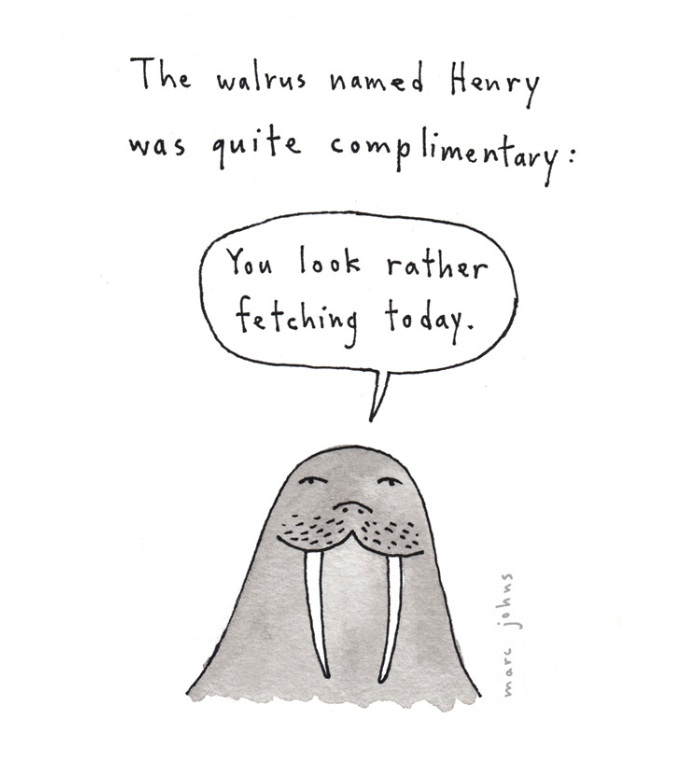
It really is all rather fetching
Filed under: The Rules

Humour can be a mask.
I also believe it is a choice, and a valid way of processing pain.
I like the power in the perspective- how fast can this be funny?
How can I retell this well?
It makes me think of The Vinegar Tasters , a traditional Chinese painting. It shows the three founders of China’s major philosophical traditions: Confucianism, Buddhism, and Taoism.
The three men (Confucius, Buddha, and Laozi) are dipping their fingers in a vat of vinegar and tasting it; one man reacts with a sour expression, one reacts with a bitter expression, and one reacts with a sweet expression. Each man’s expression represents the attitude of his philosophy: Confucianism saw life as sour, in need of rules to correct the degeneration of people; Buddhism saw life as bitter, dominated by pain and suffering; and Taoism saw life as fundamentally good in its natural state.
My favourite interpretation is when Laozi laughs at the taste.
And the barrel is full of pickles.
I’m a big fan of fermentation too.
Filed under: Great Stuff

Tsundoku is the condition of acquiring reading materials but letting them pile up in one’s home without reading them.
“Tsundoku” originated as Japanese slang (積ん読) “tsun-doku”. 「積ん読」 came from 「積んでおく」 “tsunde-oku” (to pile things up ready for later and leave) and 「読書」 “dokusho” (reading books). 「積んどく」 “tsundoku” is a euphonic change of 「積んでおく」. It is also used to refer to books ready for reading later when they are on a bookshelf. As currently written, the word combines the characters for “pile up” (積) and the character for “read” (読).
A. Edward Newton is quoted as saying: “Even when reading is impossible, the presence of books acquired produces such an ecstasy that the buying of more books than one can read is nothing less than the soul reaching towards infinity … we cherish books even if unread, their mere presence exudes comfort, their ready access reassurance.”
(thanks for the introduction Neil Perkin)
Filed under: The Rules
I got my evaluation
And on a scale of ten they gave me
For thoughts ten, hooks, three
Well, thoughts, ten, hooks, three
I make the team avoidant
Thinking for my own enjoyment
That ain’t it, kid, that ain’t it, kid
Thoughts, ten, hooks, three
It’s like to die!
Lost the defer and unlocked her
For my permission to ply
Wit and sass
Taught myself a fancy pair
Tightened up the random glare
Ditched the woes with it, all that goes with it
Wit and sass
Got the dingo-drongos won
Suddenly I’m getting national briefs
Wit and sass won’t get you jobs without beliefs
Didn’t cost a fortune neither
Didn’t hurt amex life either
Flat efficacy
I would get the strays and losers
Beggars really can’t be choosers
That ain’t it, kid, that ain’t it, kid
Fixed the assay
How do you do
Life turned into and endless medley
Of ‘Gee it had to be you’, why?
Wit and sass
Where the cupboard once was bare
Now you knock and someone’s there
You have got ’em, hey, stop the fought him, hey!
It’s a gas, just a dash of baritone
Shake your numerators and you’re fine
Wit and sass can change your life
They sure changed mine
You’re all looking at my wits now, aren’t you?
For wit and sass
Orchestra and audience
What they want is what you be
Keep the best of you, do the rest of you
Pits or class
I have never seen it fail
Confidant or a partner in- strife
Wit and sass, yes, wit and sass
Have changed my life
Filed under: Digital Strategy
Lovely thoughts from Ben Armisted
I think that all planning about two things: it’s about being interesting and being effective.
have you copped this bloke on the telly?
interrupting me favourite show
talkin tax cut not favorin’ the many?
reminds me of someone I know
not that I’m against fiscal-ly fitness
don’t get me wrong on that score
I could watch all them rich blokes forever
explain no tax cuts to the poor
and I’m not against helping the many
cripes if they was to go on the blink
the rich’d have no earning interests
it certainly makes a bloke think
now it’s true throats get squeezed when they’re talking
not that they’ve done more so of late
and it’s true they’ve put aside Tone-on
but this close to voting it’s bait
so what if we can’t save the climate
so what if we can’t afford homes
I can remember what most of them look like
so there’ really no need have those
so when this bloke says Stong new economy
Economy he says on TV
I give him nod and change channels
Cause I know he’s not talking to me
Enrol to vote – Australian Electoral Commission

This essay proposes a map for four domains of creative exploration—Science, Engineering, Design and Art—in an attempt to represent the antidisciplinary hypothesis: that knowledge can no longer be ascribed to, or produced within, disciplinary boundaries, but is entirely entangled.
It’s deliberately hard work to read, but asks cracking questions:
- Can a scientist invent better solutions than an engineer?
- Is an artist’s mindset really all that different from a scientist’s?
- Are they simply two ways of operating in the world that are complementary and intertwined?
It’s chock full of dense high nutrition nuggets:
- an intriguing assertion by Savas Dimopoulos on the connection between Art and Science: “The things that are least important for our survival are the very things that make us human.” Both Art and Science can be understood as human needs to express the world around us. Both require suspension of disbelief, offering speculations about our physical and immaterial reality prior to proof.
- The role of Science is to explain and predict the world around us; it ‘converts’ information into knowledge. The role of Engineering is to apply scientific knowledge to the development of solutions for empirical problems; it ‘converts’ knowledge into utility. The role of Design is to produce embodiments of solutions that maximize function and augment human experience; it ‘converts’ utility into behavior. The role of Art is to question human behavior and create awareness of the world around us; it ‘converts’ behavior into new perceptions of information
- Science produces knowledge that is used by engineers. Engineering produces utility that is used by designers. Designers produce changes in behavior that are perceived by artists. Art produces new perceptions of the world, thereby granting access to new information in and about it, and inspiring new scientific inquiry.
I love how this map is used to both understand and address Knotty Problems.
MIT Media Lab Summit devoted a summit to Knotty Objects that gathered designers, scientists, engineers, makers, writers, curators, and scholars around the discussion of four complex and omnipresent objects, along with the rich stories they can tell. The objects–brick, bitcoin, steak, and phone–became lenses through which the transdisciplinary nature of contemporary design was examined.
A video archive of the entire summit is available here.
Happy chewing!
Filed under: Digital Strategy, Innovation, Service Design | Tags: Innovation
Lovely thinking about the role of research, the scaffolding of teams with structure and principles, the necessity of focussing on adding value and the whole shebang being an iterative process
Link here: https://www.slideshare.net/mobile/adamconnor/design-thinking-finding-problems-worth-solving-in-health
Lovely find @markpollard
 Get Shouty